Burntide Official Website › Blog › Proprietary blends
What A 525 mg Proprietary Blend Can And Cannot Hide
- A blend total is a ceiling. No ingredient inside a 525 mg blend can exceed 525 mg, and three of four are certainly a good deal smaller.
- The order is free information. Items inside a blend must be listed in descending order by weight, so you get the ranking even when the amounts are withheld.
- It is legal and it is common. Criticising it is not the same as alleging anything.
- Four questions become unanswerable once a blend is declared, and all four matter for comparing a product to a study.
- This website prints “not published” rather than estimating a split, and the count of those is a fair way to audit any supplement site.
What a proprietary blend actually is
A proprietary blend is a permitted way of declaring several ingredients as one line on a Supplement Facts panel. Instead of an amount against each name, the panel gives a single total with the components listed beneath it, and the components must appear in descending order of weight.
The FDA labelling guide sets out the rules. Nothing about this is irregular, nothing about it is a loophole in the informal sense, and a company using one is not concealing wrongdoing. It is protecting a formula from being copied, which is a real commercial interest.
What it does, unavoidably, is make the product incomparable to the research behind its own ingredients. That consequence is the subject of this post.
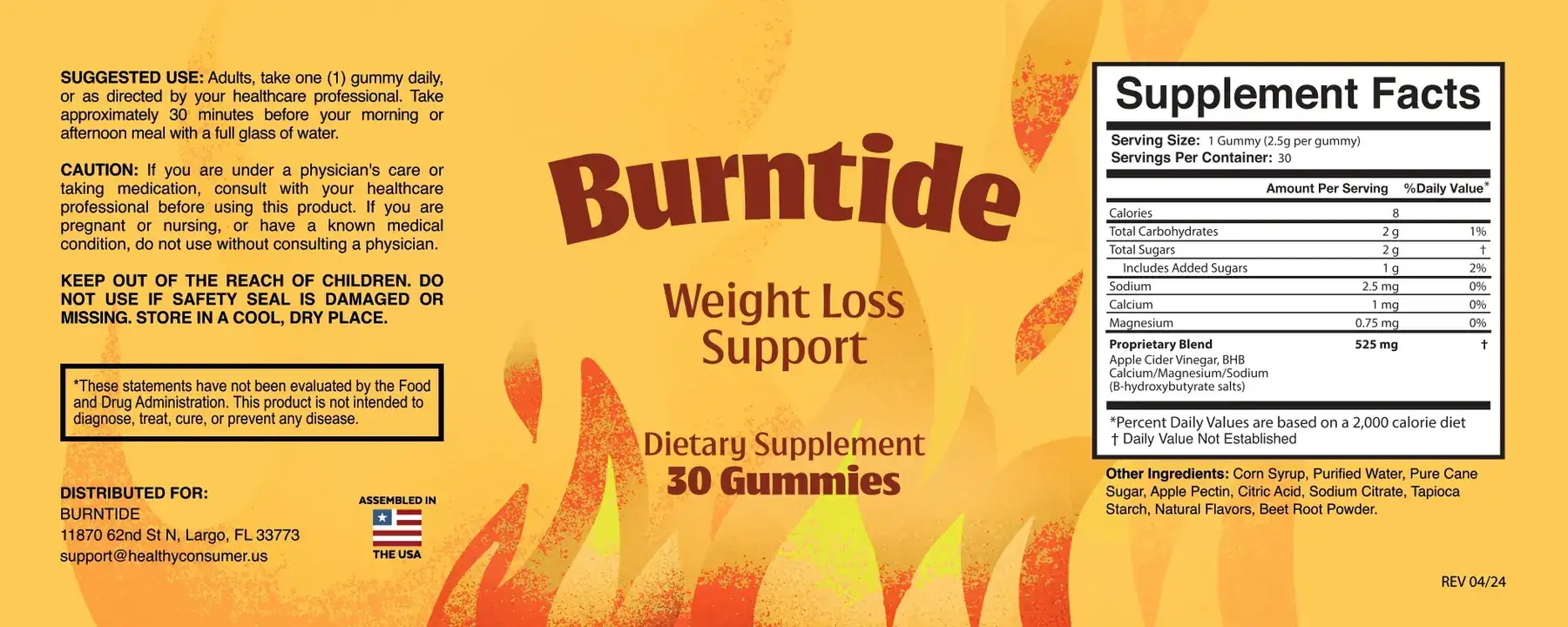
What a 525 mg total rules out
Start with what the number does tell you, because it is more than nothing and it is the part a sceptical reader tends to skip.
- No ingredient in the blend exceeds 525 mg. That is a hard ceiling and it applies to every one of the four.
- The three BHB salts together are below 525 mg, minus whatever the vinegar takes. Ketone research uses grams. This rules out anything in that region by two orders of magnitude.
- Apple cider vinegar is the largest of the four, because it is named first and the ordering rule is not optional.
- The blend is 21% of the gummy by weight. A 2.5 g gummy carrying 525 mg of blend is 79% base: sugar, water, pectin, starch, acid and flavour.
Those four statements are the whole of what the panel supports about the active side of this product, and this website does not go beyond them anywhere.
What it leaves wide open
Now the other side. Here are three formulations that would print an identical panel.
| Formula A | Formula B | Formula C | |
|---|---|---|---|
| Apple cider vinegar | 400 mg | 200 mg | 140 mg |
| BHB calcium | 50 mg | 150 mg | 135 mg |
| BHB magnesium | 45 mg | 100 mg | 130 mg |
| BHB sodium | 30 mg | 75 mg | 120 mg |
| Printed panel | 525 mg blend | 525 mg blend | 525 mg blend |
All three are legal. All three satisfy the descending-order rule. All three would produce exactly the label photographed on this jar, and they are meaningfully different products. The figures above are illustrations rather than estimates of this formula, and that distinction is the reason this website will not publish a split.
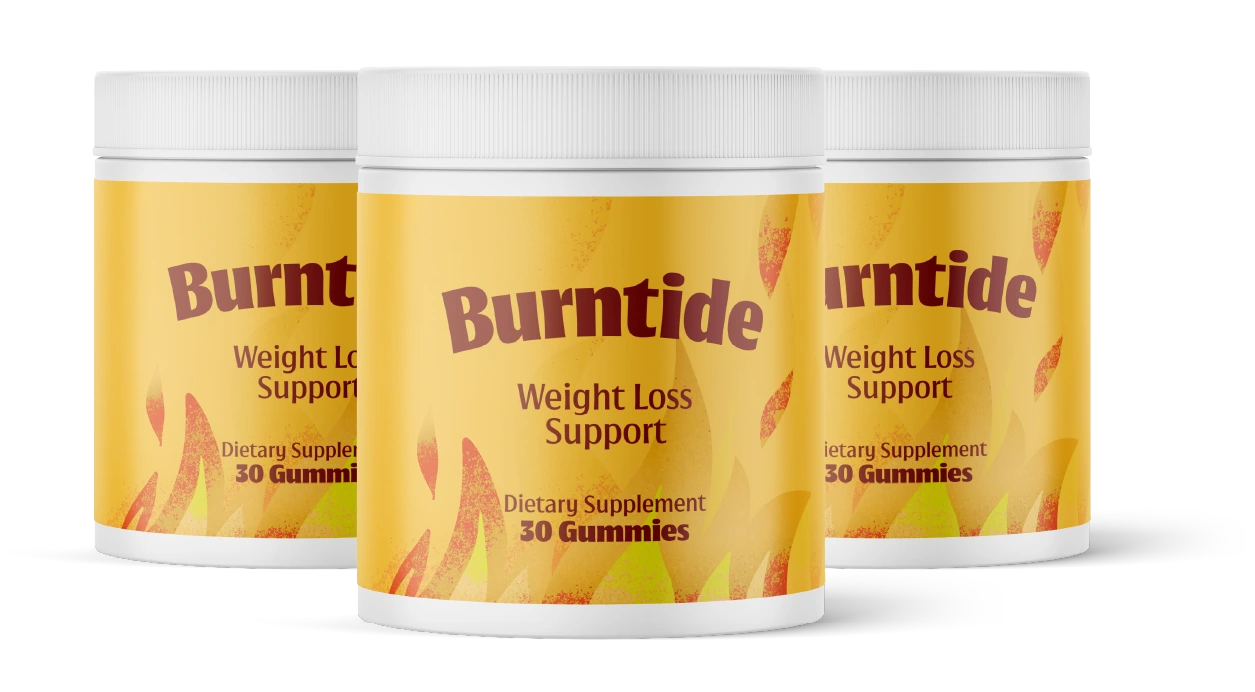
The blend total is printed on every jar.
Many competitors print nothing at all. That is a real difference and it is still less than a buyer needs. Sixty days to decide what it is worth to you.
Price shown at checkout · 60-day guarantee
Order Burntide On The Official WebsiteThe four questions a blend makes unanswerable
These are the four a pharmacist would ask, and on this label none of them has an answer.
1. How much acetic acid
The vinegar research measured acetic acid. A vinegar solid is a dried preparation of which some proportion is acid. Without the split and without the acid content, the trials cannot be related to this product even in principle. The 2025 dose-response meta-analysis makes the amount the whole question.
2. Which enantiomer of beta-hydroxybutyrate
Stubbs 2017 found the D and racemic DL forms behave differently, and most salt products use the cheaper racemic mixture in which only half is the readily used form. The label does not say. At this amount the question is close to academic, and a fully disclosed panel would still answer it.
3. How the mineral load divides
The panel declares calcium at 1 mg, magnesium at 0.75 mg and sodium at 2.5 mg, all rounding to 0% of the Daily Value. Those figures are consistent with a small BHB salt contribution and they do not let you work backwards to the salt amounts, because sodium citrate in the base contributes as well.
4. Whether any ingredient is a token
This is the one the practice is criticised for. A blend can carry a fourth ingredient at a milligram purely so the name appears on the panel. Nothing suggests that is happening here and nothing rules it out, which is precisely the problem.
Why a manufacturer would choose one
It is worth steelmanning the decision rather than assuming bad faith.
- Formula protection. A disclosed panel is a recipe. In a category with very low barriers to entry, that is a genuine commercial concern.
- Flexibility. Ingredient costs move. A blend lets a manufacturer adjust proportions without a label revision, which is efficient and is also the reason a blend tells you less over time, not more.
- Convention. A great many competing products do it, so a company disclosing fully hands rivals information and gets little visible credit from buyers who are not reading panels.
None of those reasons helps a buyer, and all three are real. The fair conclusion is that a blend is a legitimate choice with a cost, and the cost falls entirely on the person deciding whether to buy.
How to shop when a label is a blend
Four practical moves, in order of how much they are worth.
- Prefer a disclosed panel where one exists. All else equal, a product that prints its amounts has given you something to check and has accepted the cost of doing so.
- Use the ceiling. A blend total still rules things out. If the total is smaller than a single research dose, you have your answer without needing the split.
- Use the ordering. First-named is largest. If the ingredient you care about is named fourth in a small blend, that is informative.
- Ask for a certificate of analysis. The answer, including a refusal or a silence, tells you a great deal. None exists for this lot and this website says so.
The eight-point checklist turns all of that into something you can carry to any product in this category, including this one, which scores five out of eight.
What to ask a company that uses a blend
You are entitled to ask, and the answer is informative whatever it is. Four questions, in the order that gets the most useful reply.
- “What is the amount of the first-named ingredient?” Not the whole split. One number. A company willing to disclose the largest component has told you most of what you needed, and a company refusing even that has told you something too.
- “Do you have a certificate of analysis for my lot?” Give the lot code from the base of the jar. This is the request that separates a company with documents from one without.
- “Which form of the ingredient is used?” For a ketone salt, D or racemic DL. For a vinegar, a powder or a concentrate, and at what acidity.
- “Has the finished product been tested?” Almost always no, across the whole category. The value of asking is that it establishes which claims on the page are about ingredients rather than about the product.
For this product, the order desk on +1 (631) 016-1313 will take those questions to the manufacturer. This desk does not hold the answers and will not invent them, which is the whole reason the page you are reading exists in this form.
One more thing worth knowing about blends
A blend total can change between production runs without the label changing, because the total is what is declared and the proportions inside it are not. That is legal and it is the reason a blend tells you less over time rather than more. It is also a good argument for reading the panel on each jar you receive rather than assuming it matches the last one.
What would change this assessment
Three documents, none of which has been supplied.
- A published split of the 525 mg blend.
- The acetic acid content of the vinegar component.
- A third-party certificate of analysis for lot BUR-26/BU-7406, naming the laboratory and the assay.
If any of the three arrives, it will be published here in full, the affected pages will be corrected and the review date will move forward. That is the correction commitment stated on the about page, and this post is the place it would matter most.
Sources cited in this post
- U.S. Food and Drug Administration. Dietary Supplement Labeling Guide. https://www.fda.gov/food/dietary-supplements-guidance-documents-regulatory-information/dietary-supplement-labeling-guide
- Arjmandfard D, Behzadi M, Sohrabi Z, et al. Effects of apple cider vinegar on glycemic control and insulin sensitivity in patients with type 2 diabetes: a GRADE-assessed systematic review and dose-response meta-analysis of controlled clinical trials. Front Nutr. 2025;12:1528383. PMID 39949546. https://pubmed.ncbi.nlm.nih.gov/39949546/
- Stubbs BJ, Cox PJ, Evans RD, et al. On the metabolism of exogenous ketones in humans. Front Physiol. 2017;8:848. PMID 29163194. https://pubmed.ncbi.nlm.nih.gov/29163194/
- Evans M, McClure TS, Koutnik AP, Egan B. Exogenous ketone supplements in athletic contexts: past, present, and future. Sports Med. 2022;52(Suppl 1):25-67. PMID 36214993. https://pubmed.ncbi.nlm.nih.gov/36214993/
- National Institutes of Health, Office of Dietary Supplements. Dietary Supplements for Weight Loss: Fact Sheet for Health Professionals. https://ods.od.nih.gov/factsheets/WeightLoss-HealthProfessional/
- U.S. Food and Drug Administration. Questions and Answers on Dietary Supplements. https://www.fda.gov/food/information-consumers-using-dietary-supplements/questions-and-answers-dietary-supplements

Every page, every journal post, the bottle facts and the ingredients go through review by Dr. Spencer Berry, MD before they ship. We write from the Burntide label, the Supplement Facts panel photographed on the jar, and the distributor’s own paperwork. Sources are linked inline and every one was opened before it was cited. Where a figure is not disclosed we print “not published” rather than estimating it. Corrections go to [email protected] and move the date at the top of this post.