Burntide Official Website › Blog › Ketone salts vs esters
Does BurnTide Use Ketone Salts or Esters? How the Two Forms Differ
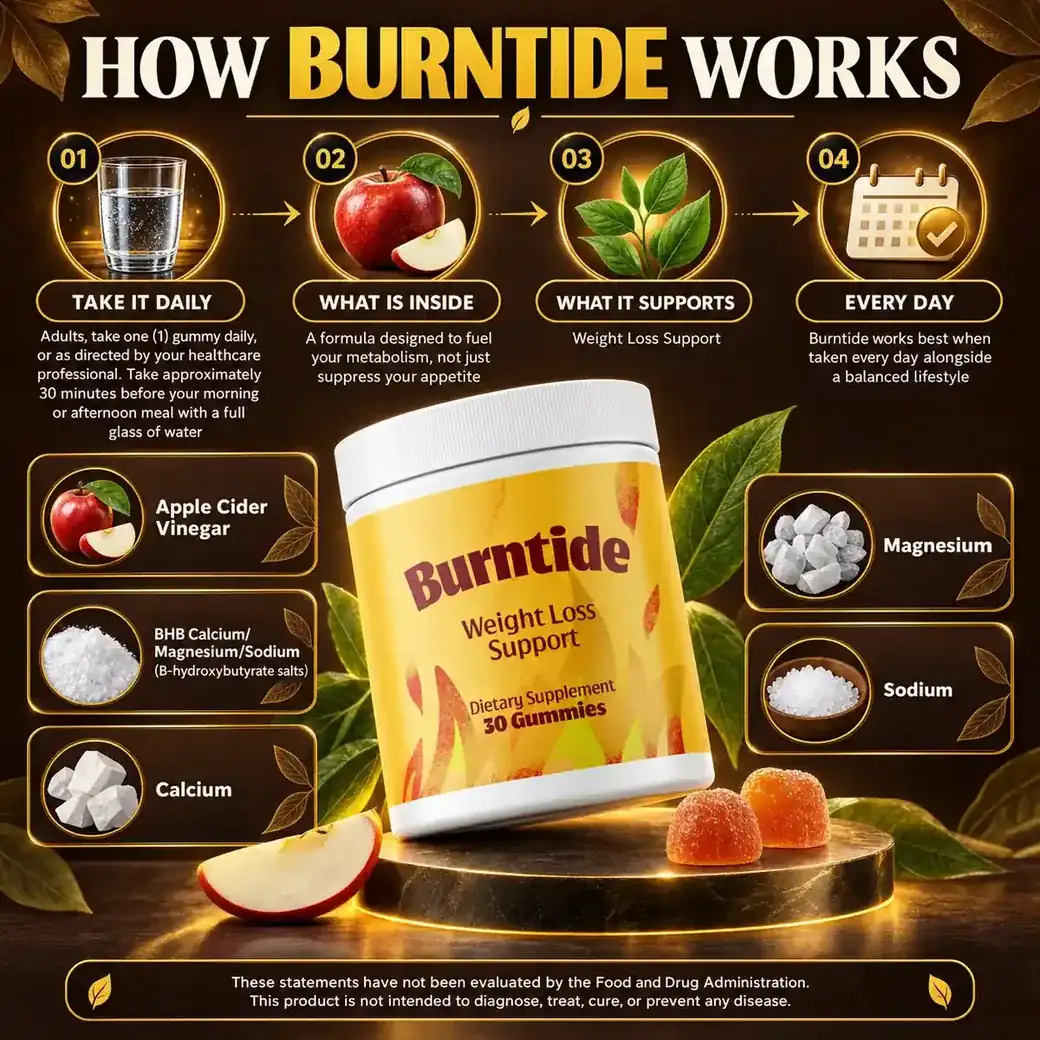
Ketone salts bind beta-hydroxybutyrate to a mineral. Ketone esters join it to another molecule and are usually sold as drinks. BurnTide names BHB salts, with calcium, magnesium and sodium, inside a 525 mg blend. No esters are listed. The research on both forms used far larger amounts than a gummy holds.
Weigh the form and the amount.
Salts, esters and doses are explained above, so you can judge the label yourself. The button opens the checkout page with each pack price and the 60-day terms.
This website earns a commission when you buy through it.
See today’s price and guarantee- Salts: BHB bound to a mineral. BurnTide names calcium, magnesium and sodium.
- Esters: BHB joined to another molecule. None is listed on the BurnTide panel.
- Research size: 10 to 25 grams of salts or esters in a single drink.
- BurnTide blend: 525 mg in total, with the split not published.
- Form of BHB: the D or DL form is not published.
- Price: not published here. See the checkout page.
How do ketone salts and ketone esters differ?
Both are ways of delivering the same small molecule, beta-hydroxybutyrate, which people shorten to BHB. The difference is what the BHB is attached to.
In a ketone salt, BHB is bound to a mineral. The mineral can be sodium, calcium, magnesium or another. The result is a powder that dissolves in water. In a ketone ester, BHB is joined to a different carrier molecule. The result is usually a liquid, and in the research it was given as a drink.
Both forms were studied. Stubbs 2017 is a paper on the metabolism of exogenous ketones in humans, and it is the main reference this site uses on how the forms behave. Stubbs 2018 looked at a ketone ester drink and appetite, and Soto-Mota 2019 looked at ketone monoester drinks taken for 28 days in healthy adults. Those are paper titles, and each tested a drink at a dose far above a gummy.
| Point | Ketone salt | Ketone ester |
|---|---|---|
| What it is | BHB bound to a mineral | BHB joined to a carrier molecule |
| Usual form | Powder, capsule or chew | Drink |
| Minerals come along | Yes. Sodium, calcium or magnesium | Not by design |
| In BurnTide | Yes. Three BHB salts are named | No ester is listed |
Which form does BurnTide use?
Salts. The blend line reads apple cider vinegar, BHB calcium, BHB magnesium and BHB sodium, with a note that the BHB is in beta-hydroxybutyrate salt form. There is no ester on the panel.
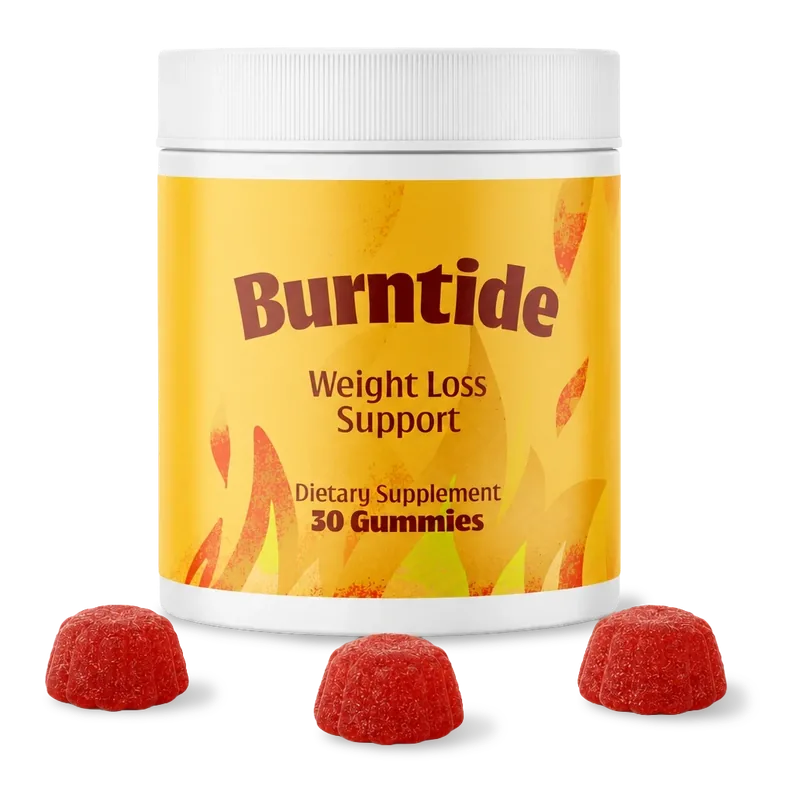
This has a practical result you can see on the jar. Salts bring minerals with them, so the panel carries three mineral rows. Their amounts are 2.5 mg for sodium, 1 mg for calcium and 0.75 mg for magnesium, and all three sit at 0% of a daily value. The minerals are there because the salts are there, and the amounts are tiny.
The panel does not say how the 525 mg is split. It does not say how much of the blend is any one salt. It also does not say which version of the BHB molecule was used. The supplier's own paperwork flags that last gap, and this site reports it as not published.
Why does the D or DL form of BHB matter?
BHB comes in two mirror-image shapes, called D and L. A mix of both is called DL. The body treats them differently. Stubbs 2017 found that the D form and the mixed DL form behave differently in the body.
This is one of four documents the site would want to see before it could say more. The other three are a certificate of analysis for lot BUR-26/BU-7406, a published split of the 525 mg blend and the acetic acid content of the vinegar. None has been supplied.
For a reader, the lesson is modest. When two products both say BHB, they may not be the same thing. A label that names the form is easier to judge than one that does not. BurnTide's does not name it.
How do the research doses compare with one gummy?
Here the numbers settle most arguments. The studies this site names dosed 10 to 25 grams of salts or esters per drink. One BurnTide gummy holds a 525 mg blend, which is 0.525 g, and that figure covers the vinegar as well.
So the entire blend is twenty to fifty times smaller than the research amount, and the BHB share is smaller still. The gap is not a small one. It is the main reason this site says the evidence is for the ingredients and not for the finished gummy.
No clinical trial of the finished BurnTide gummy exists. Every study cited on this site tested an ingredient, usually at a much higher dose and often in another form.
Why would a maker choose salts for a gummy?
The maker does not say why it chose salts, so this is our reading only. In the research, esters were given as drinks and salts were mixed into drinks as well. A chewable is a different format, and a salt is a simple thing to carry in a gummy base. That is a plain reason, and it does not need a hidden motive.
There is a trade-off. Salts bring minerals, and in big amounts those minerals add up. That is part of why the research on salts is read with care about sodium, calcium and magnesium. At a gummy's size the minerals are tiny, which is both reassuring and a sign of how small the BHB share must be.
A second trade-off is cost and clarity. A maker who prints only a blend total does not have to state any one amount. The reader loses the chance to compare. This site's other article on proprietary blends covers that point in detail.
What should a buyer ask of any ketone product?
Use the same short list on every label, whether it names salts, esters or both.
- Which form is it, and is the D or DL form named?
- How many milligrams or grams of BHB are in one serving?
- Is the amount printed, or is it hidden inside a blend total?
- Does a certificate of analysis exist for the lot you will receive?
- Has the finished product been studied, or only its ingredients?
BurnTide answers the second and third with not published, the fourth with none supplied and the fifth with no trial of the finished gummy. That is not a hidden defect. It is the printed position, and you can weigh it.
Who should ask a doctor before taking any ketone or mineral product?
The BurnTide label gives the rule. If you are under a physician's care or taking medication, consult your healthcare professional before using this product. If you are pregnant or nursing, or have a known medical condition, do not use without consulting a physician. It is for healthy adults 18 and over only.
If you were told to watch sodium, bring the panel to whoever told you. At 2.5 mg per gummy it is unlikely to be the thing that matters, but a clinician can say so with your notes in front of them.
BurnTide is not FDA approved, and no dietary supplement is. Treat this page as general reading, and let your own clinician answer personal questions.
What are the BurnTide salt, label, price and guarantee facts?
| Item | What the source says |
|---|---|
| BHB form named | BHB calcium, BHB magnesium and BHB sodium, as beta-hydroxybutyrate salts |
| Esters | None listed on the panel |
| Blend | 525 mg total with apple cider vinegar. The split is not published |
| Minerals per gummy | Sodium 2.5 mg, calcium 1 mg, magnesium 0.75 mg |
| D or DL form of BHB | Not published |
| Research dose | 10 to 25 g of salts or esters in a single drink |
| Price | Not published here. Set on the checkout page. One-time payment, no subscription |
| Guarantee | 60 days from purchase. A purchase policy, not a medical promise |
Frequently asked questions
Are ketone salts and ketone esters the same thing?
No. Salts bind BHB to a mineral and are usually powders. Esters join BHB to a carrier molecule and are usually drinks. Both were studied at gram doses.
Which form of BHB does the BurnTide jar name?
Salts. The blend names BHB calcium, BHB magnesium and BHB sodium. No ester is listed.
What is the BHB amount in each gummy?
Not published. Only the combined 525 mg blend is printed, and it also holds the vinegar.
Are ketone salts better than esters?
This site does not rank them. The research on each used far more than a gummy holds, so neither result transfers to BurnTide.
Is the BHB in BurnTide the D form or the DL form?
Not published. The supplier paperwork does not state it, so this site cannot say.
Is BurnTide FDA approved?
No. BurnTide is not FDA approved, and no dietary supplement is approved by the FDA before sale.
Our view
Our view is that salts versus esters is a useful question and a small one for BurnTide. The panel names salts, the amounts are not printed and the research used grams, not milligrams.
That makes the gummy a modest daily habit, not a ketone product. If that suits you, the 60-day guarantee gives you room to find out. A quick word with your doctor first is wise if you take regular medicine. This page is general information, not medical advice.
A small blend, a clear exit.
If a once-daily chew with a readable label suits you, the checkout page lists the current price and the guarantee. No dollar figure is printed here.
This website earns a commission when you buy through it.
See today’s price and guaranteeLast updated October 16, 2026

Reviewed on by Dr. Spencer Berry, MD, Physician. We write from the Burntide label, the Supplement Facts panel on the jar and the distributor’s own paperwork. Where a figure is not published we write “not published” and do not estimate it. This page is general information, not medical advice. Corrections go to [email protected].