Burntide Official Website › Blog › Reading a label
How To Read A Supplement Label In Five Minutes
- Serving size first, always. Every figure on a panel is per serving, and a two-gummy serving doubles the real cost per day.
- Then the blend line, if there is one. A total is a ceiling. It rules things out even when it does not tell you the split.
- Then the order inside the blend. Descending by weight, required by law, and free information the panel gives away.
- Then the other-ingredients line. On a chewable it is usually longer than the panel, and it is where the sugar lives.
- Then the daggers. A dagger means no Daily Value has been established, not that anything is wrong.
Why five minutes is worth it
A Supplement Facts panel is a legal document with a fixed structure. Once you know the structure, any panel in a shop or on a screen takes about fifteen seconds to read and five minutes to read properly. That is a better use of time than an hour of reviews, because the panel is the only part of a product page nobody can write freely.
The FDA labelling guide is the underlying reference and it is long. What follows is the working version: five steps, in the order that gets you to a decision fastest, worked at the end on a real label.
Step one: the serving size
Everything else on the panel is per serving, so reading any figure before this one is a waste of effort.
- How many units is a serving? One gummy, two capsules, a scoop. This is where cost comparisons are quietly lost.
- How many servings per container? A jar of 30 at two per serving is fifteen days, not thirty.
- What is the unit weight? On a chewable this tells you how much of the thing is gummy. A 2.5 g gummy carrying 525 mg of blend is 79% base.
Do the division before anything else: total price divided by servings per container, times servings per day. That is the only number that compares two products, and it is the arithmetic on the pricing page.
Step two: the actives, or the blend
This is the part the product is sold on, and it comes in two shapes.
A disclosed panel
Each active with its own amount. This is what you want. It lets you compare the label against the research dose for that ingredient, which is the only comparison that means anything.
A proprietary blend
One total, several names beneath it, no individual amounts. Legal, common, and it makes the comparison above impossible. Two things still survive:
- The total is a ceiling. If it is smaller than a single research dose of the first ingredient, you have your answer without needing the split.
- The order is by weight, descending. First-named is largest. An ingredient named fourth in a small blend is present in a small amount.
A whole post on this is here, worked on the panel at the end of this one.
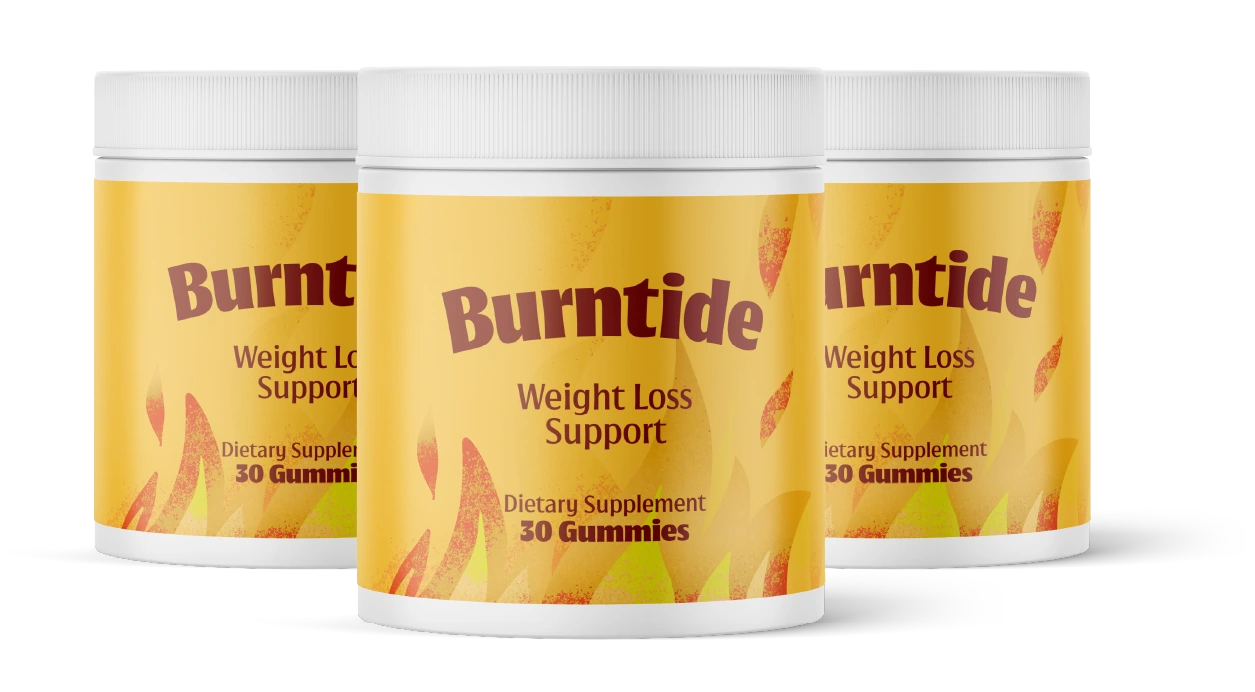
This method works on any label, including this one.
Run the five steps on the panel below, then on anything else you are considering. Sixty days to decide either way.
Price shown at checkout · 60-day guarantee
Order Burntide On The Official WebsiteStep three: the other ingredients
Underneath the black box sits a line headed Other Ingredients, and on a chewable it is usually longer than the panel above it. Three things live there.
| What to look for | Why | Example on a gummy |
|---|---|---|
| Sweeteners | This is where the sugar comes from, and the panel's sugar line will confirm it | Corn syrup, cane sugar |
| Gelling agents | Pectin means no gelatin, which decides the vegetarian question | Apple pectin, tapioca starch |
| Acids and buffers | Texture and shelf life, not actives | Citric acid, sodium citrate |
| Colours and flavours | Natural flavors is a permitted collective term. Nobody outside the manufacturer knows what is in it | Natural flavors, beet root powder |
| Allergen statements | Where a manufacturing cross-contact note would appear if there is one | Often absent, which is not the same as absent risk |
A useful habit: read this line before the marketing. It tells you what the product is made of rather than what it is sold as, and it is the fastest way to spot a product that is mostly base.
Step four: the symbols and percentages
Three symbols do most of the work on a panel and all three are routinely misread.
- A percentage Daily Value compares the amount to a reference intake for an average adult. 0% means the amount is trivially small against that reference, which on a mineral is genuinely informative.
- A dagger means no Daily Value has been established for that row. It is common on blends and on total sugars. It is not a warning.
- An asterisk footnote usually points at the statement that percent Daily Values are based on a 2,000 calorie diet, and on the front of a jar it usually points at the FDA disclaimer.
The 0% rows are the ones worth pausing on. On a ketone product they let you sanity-check the dose without the blend split, as the BHB post works through.
One symbol that is not on the panel at all
Front panels in this category often carry a claim with a symbol beside it, pointing at the statement that the claim has not been evaluated by the Food and Drug Administration. That footnote is a legal requirement rather than a comment on the claim, and it appears on almost every supplement sold. Its presence is not a warning and its absence would be a problem.
Step five: the parts that are not the panel
Four things sit outside the black box and all four matter.
- Suggested use. When, with what, and how much. Timing instructions are often the most evidence-based sentence on a label.
- The caution block. Pregnancy, medication, physician's care. Read it before you buy rather than after.
- The distributor line. A name and an address. A product with neither is a product with nobody to call.
- The lot code. Usually inkjetted on the base. It is what ties your jar to a production run. What that can and cannot prove.
Five label phrases that mean less than they look
Once the panel is read, the rest of the packaging is marketing, and five phrases turn up so often that they are worth decoding in advance.
| The phrase | What it actually asserts |
|---|---|
| Made in a registered facility | That the manufacturer filed a registration for the building. It is not approval of the product and the FDA is explicit about the distinction |
| Clinically studied ingredients | That an ingredient has been studied somewhere, at some dose, in some form. It says nothing about the amount in this product |
| Doctor formulated | Usually nothing checkable. If no clinician is named, no credential given and no date stated, there is nothing for anybody to verify |
| 100% natural | A phrase with no fixed regulatory meaning for supplements. Corn syrup and citric acid are industrial inputs whatever their origin |
| Third-party tested | Sometimes substantial and sometimes decorative. Ask which laboratory, for which lot, and for what. A real answer is a document |
None of those five is necessarily dishonest. Each is a statement that reads as stronger than it is, and knowing what each one asserts turns a front panel from persuasion into information. Every seal on this particular jar is explained here, including the two that cannot be checked by anybody.
The whole method on one real label
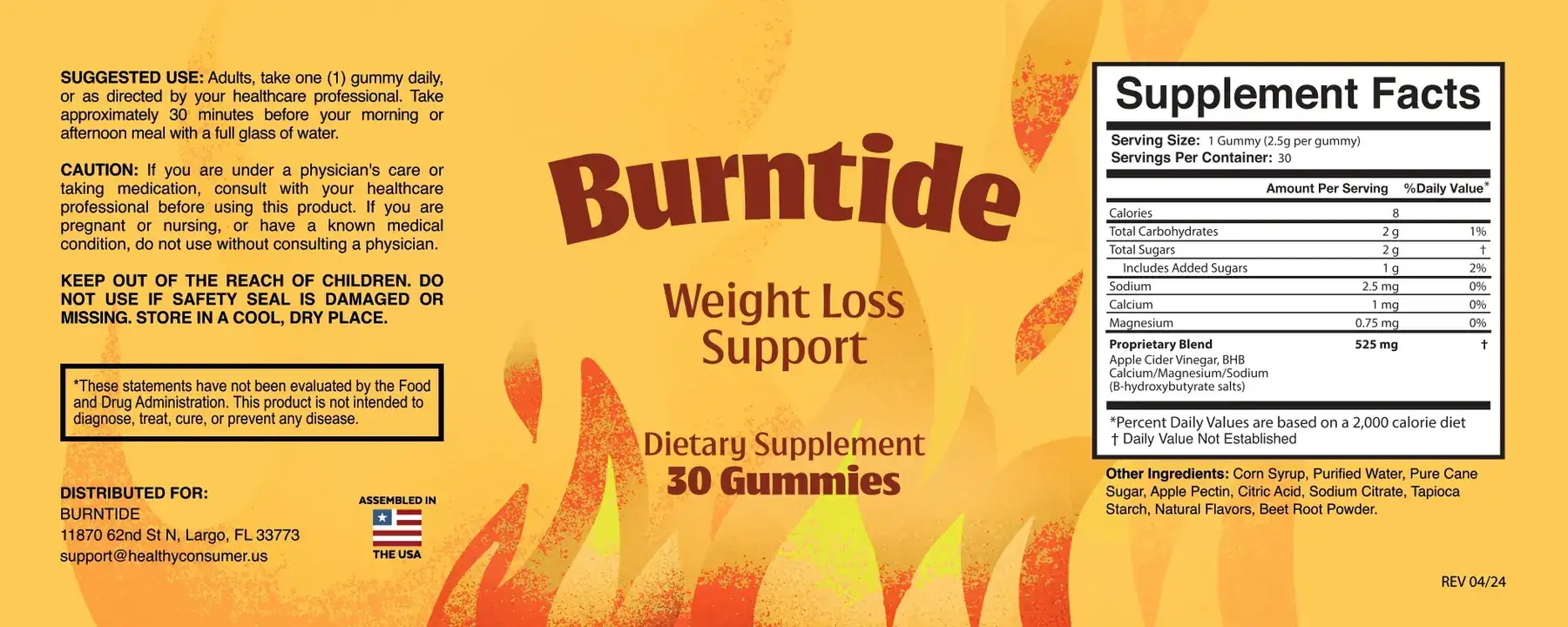
Applied to the panel in the picture, which is the product this website sells. Five steps, about ninety seconds.
| Step | What the panel says | What it means |
|---|---|---|
| 1. Serving size | One gummy, 2.5 g, 30 per jar | One jar is exactly one month. Divide any price by 30 per jar |
| 2. Actives | A 525 mg proprietary blend: apple cider vinegar, BHB calcium, BHB magnesium, BHB sodium | A ceiling rather than a formula. Vinegar is the largest of the four |
| 3. Other ingredients | Corn syrup, purified water, pure cane sugar, apple pectin, citric acid, sodium citrate, tapioca starch, natural flavors, beet root powder | Pectin means no gelatin. Two sweeteners means the sugar row is real |
| 4. Symbols | 2 g sugars with a dagger, three minerals at 0%, blend with a dagger | The 0% rows say the mineral contribution is trivial, which bounds the salt dose |
| 5. Outside the box | One gummy 30 minutes before a meal with water; caution block; distributor address; lot on the base | The timing is the evidence-based part. The lot is the traceable part |
That is a fair, complete reading of a real label in under two minutes, and it includes both the flattering parts and the unflattering ones. Run the same five steps on whatever else you are considering. The eight-point checklist turns the result into a decision, and the NIH Office of Dietary Supplements is the neutral background reading for the whole category.
Sources cited in this post
- U.S. Food and Drug Administration. Dietary Supplement Labeling Guide. https://www.fda.gov/food/dietary-supplements-guidance-documents-regulatory-information/dietary-supplement-labeling-guide
- U.S. Food and Drug Administration. Questions and Answers on Dietary Supplements. https://www.fda.gov/food/information-consumers-using-dietary-supplements/questions-and-answers-dietary-supplements
- National Institutes of Health, Office of Dietary Supplements. Dietary Supplements: What You Need to Know. https://ods.od.nih.gov/factsheets/WYNTK-Consumer/
- National Institutes of Health, Office of Dietary Supplements. Calcium: Fact Sheet for Health Professionals. https://ods.od.nih.gov/factsheets/Calcium-HealthProfessional/
- National Institutes of Health, Office of Dietary Supplements. Magnesium: Fact Sheet for Health Professionals. https://ods.od.nih.gov/factsheets/Magnesium-HealthProfessional/
- Centers for Disease Control and Prevention. About Sodium and Health. https://www.cdc.gov/salt/about/index.html
- U.S. National Library of Medicine, MedlinePlus. Dietary Supplements. https://medlineplus.gov/dietarysupplements.html

Every page, every journal post, the bottle facts and the ingredients go through review by Dr. Spencer Berry, MD before they ship. We write from the Burntide label, the Supplement Facts panel photographed on the jar, and the distributor’s own paperwork. Sources are linked inline and every one was opened before it was cited. Where a figure is not disclosed we print “not published” rather than estimating it. Corrections go to [email protected] and move the date at the top of this post.